CLM vs AI contract review: what is the difference?
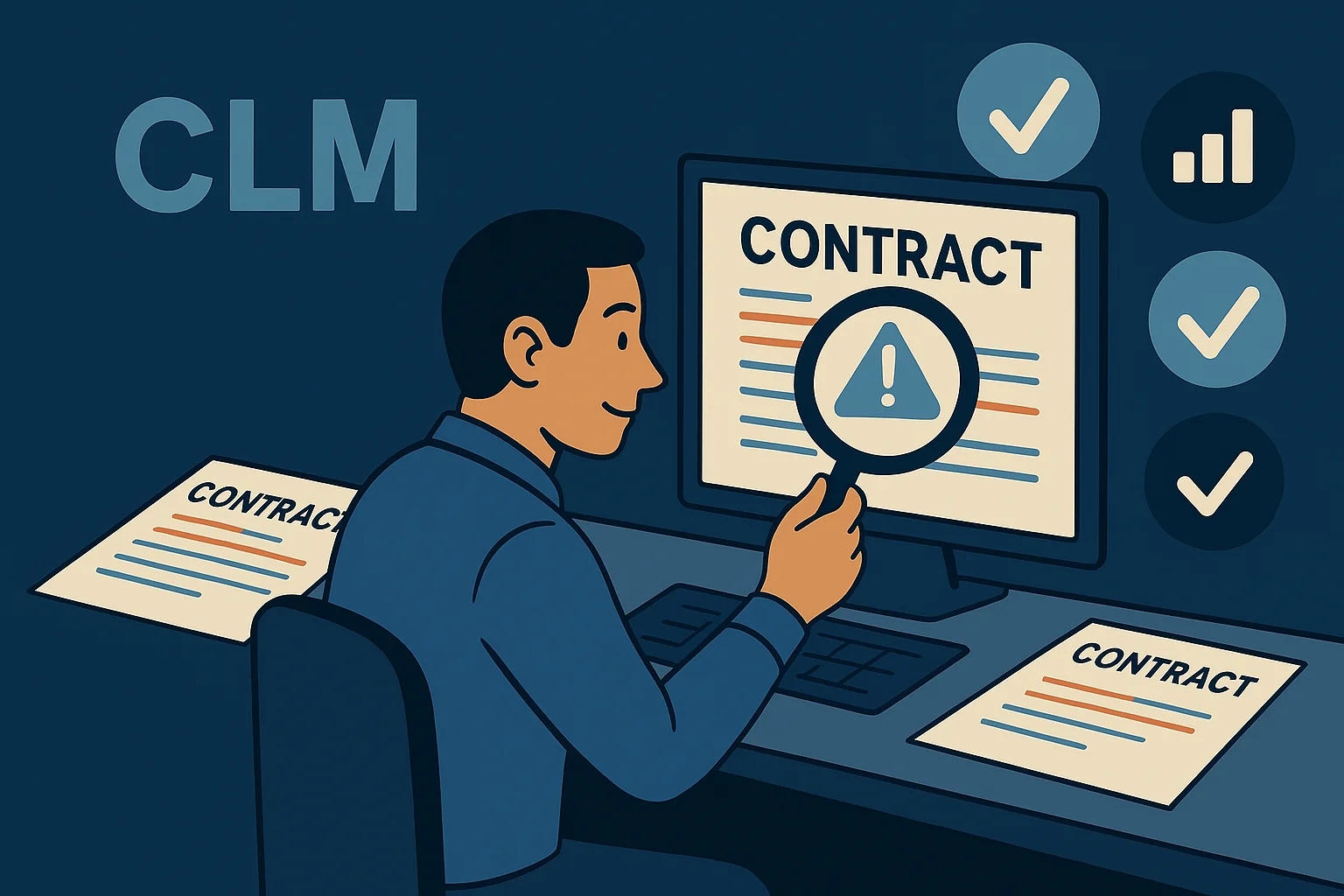
CLM and AI contract review solve different jobs. A contract lifecycle management platform usually manages templates, approvals, storage, signatures, renewal dates, and workflow history. AI contract review analyzes the text of the agreement in front of you: what looks risky, what changed, what is missing, and what should be escalated.
The mistake is buying the broadest system when the real bottleneck is narrower. If your team cannot find contracts, misses renewals, or needs approval workflows, CLM may be the right investment. If your team already has contracts but struggles to review them quickly, AI Contract Analysis and AI Contract Comparison may solve the immediate problem faster.
What CLM is built to manage
CLM is strongest when the contract process itself is the problem. It gives teams a place to create templates, route approvals, collect signatures, store signed documents, track obligations, and report on renewals.
That matters for legal operations, procurement, sales, and finance teams with many contracts moving through many owners. A CLM can reduce chaos around ownership and process. It is less useful when the immediate question is: is this clause risky, what changed in this draft, or what protection is missing?
What AI contract review is built to analyze
AI contract review starts with the text. CompareX reviews clauses, flags risk, identifies missing protections, compares drafts, and answers contract questions with context. It is a first-pass review layer, not a legal department and not a full repository.
This is useful before legal escalation, during procurement review, after a counterparty sends redlines, or when a small team needs to understand a contract before deciding what to do next.
How CLM and AI review work together
For many teams, the strongest setup is not CLM or AI review. It is both, with clear ownership. The CLM manages process and history. CompareX reviews the contract text and produces the issue list.
A practical workflow looks like this: export the draft from your CLM, upload it to CompareX, review the risk flags and changed terms, then send the decision-ready notes back into the approval process. The CLM remains the system of record. CompareX handles the contract intelligence step.
How to choose
Choose CLM first if your bottleneck is storage, approvals, signatures, renewal tracking, or audit trail. Choose AI contract review first if your bottleneck is reading the agreement, comparing drafts, spotting missing protections, or preparing legal escalation.
If both are problems, do not assume the enterprise CLM must solve everything. Pick the system of record for lifecycle work, then add the review layer where text decisions happen.
Where CompareX fits
CompareX is for teams that need faster first-pass contract review and comparison. It helps business, procurement, legal ops, and small teams understand risks and changed terms before signature.
Start with the Free Contract Analyser if you have one agreement to review. Use AI Contract Comparison when two versions need to be compared.