How Small Teams Review Contracts Without Hiring More People
Growing companies rarely lose momentum because they lack ambition. They lose momentum because every contract starts to feel like a custom project, and the same few people get pulled into every review.
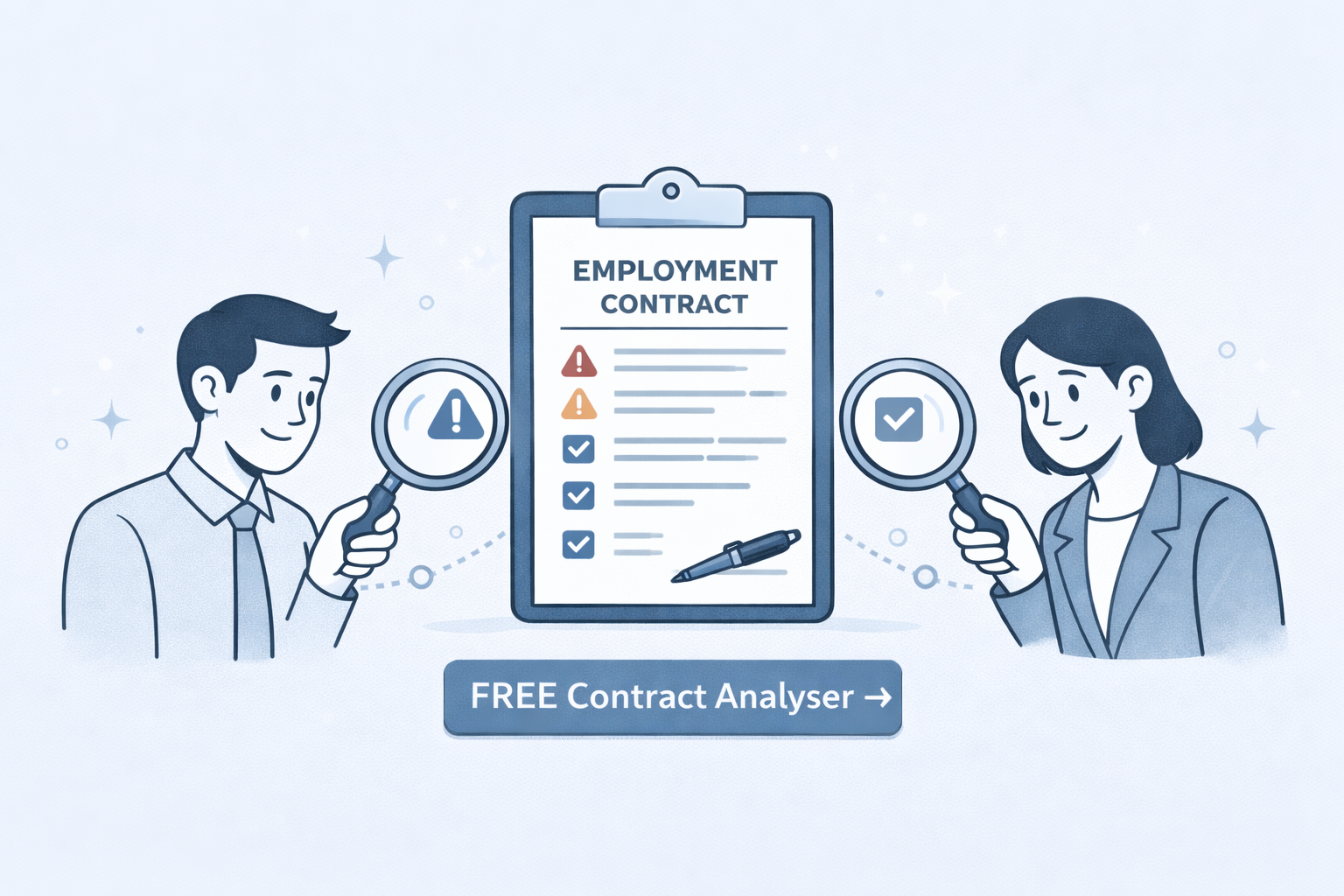
The answer is not always to hire more reviewers. In many teams, the real problem is the lack of a repeatable review system. With the right triage, baseline language, and AI-assisted first pass, sales, procurement, operations, and legal can move faster without lowering standards. If you want to test that workflow immediately, start with CompareX's Free Contract Analyser.
Need a fast first pass on a live document? Upload it to the Free Contract Analyser.
1) Stop Treating Every Contract Like a Special Case
Small teams usually hit the same bottleneck first: every agreement, from a simple NDA to a supplier contract, lands in one shared inbox or one Slack thread. That creates two problems:
- low-risk contracts wait too long
- senior reviewers spend time on routine issues instead of real negotiations
The fix is simple in principle: define contract categories and match review depth to the level of risk.
For example:
- low-risk: standard NDA, light services agreement, routine renewal
- medium-risk: customer paper with commercial deviations, non-standard vendor terms
- high-risk: large-value deals, unusual indemnities, data-heavy contracts, major liability exposure
Once you classify contracts this way, you stop over-reviewing simple documents and start protecting time for the deals that actually need attention.
2) Build a First-Pass Review Layer for Business Teams
The most effective contract workflows do not begin with legal. They begin with a structured first pass done by the team closest to the deal.
That first pass should answer practical questions:
- What changed from the expected template?
- Are there obvious payment, liability, renewal, or termination issues?
- Are important clauses missing?
- Does this contract need legal review now, or only after business comments?
CompareX supports that first-pass workflow with Risk & Compliance Insights, Gap Analysis, and Clause-by-Clause Annotations.
This is where small teams win back time. Instead of sending raw documents upstream, they send a pre-reviewed summary with real context.
3) Turn Your Best Judgment into a Repeatable Playbook
If your team always asks the same reviewer the same questions, you already have a playbook. It just lives in people's heads.
Write it down.
A practical contract playbook should include:
- approved fallback language for key clauses
- a list of issues business teams can resolve themselves
- clear legal escalation triggers
- examples of acceptable vs unacceptable deviations
- contract-type-specific checks for sales, procurement, and operations
This matters because speed does not come from working faster under pressure. It comes from making fewer decisions from scratch.
For broader operating context on how growing teams scale work with AI, see Arthur & Co.
4) Use AI to Reduce Review Noise, Not to Pretend Risk Disappears
AI is most useful in contract review when it reduces noise before a human makes the final call.
That means using it to:
- summarize long agreements
- compare versions across drafts
- surface unusual clauses
- identify missing protections
- answer targeted reviewer questions with clause references
It does not mean pretending every contract can be auto-approved.
The strongest setup is layered:
- business owner uploads the document
- AI creates the first-pass analysis
- business reviewer checks the flagged issues
- legal only sees what requires judgment or negotiation
That routing model is far more scalable than a "send everything to legal" habit.
5) Define Escalation Rules Before the Queue Gets Full
When teams say contract review is slow, the underlying issue is often unclear ownership.
Define escalation rules such as:
- legal must review contracts above a value threshold
- procurement must review supplier terms with pricing or renewal deviations
- security or privacy must review data processing clauses
- leadership must approve unlimited liability, exclusivity, or long lock-in periods
Once these rules are written down, the team stops debating process on every deal.
CompareX's Interactive Contract Q&A also helps reviewers ask precise follow-up questions before escalating.
6) Measure the Workflow Like an Operations Process
Contract review should be managed like any other business workflow.
Track a few simple metrics:
- time from intake to first review
- time from first review to approval or escalation
- percentage of contracts that can be handled without legal
- recurring issues by clause type
- average negotiation cycle length by contract type
These numbers show whether your bottleneck is intake, review quality, negotiation, or resourcing.
Without measurement, teams often assume they need more people when they actually need better routing and clearer standards.
7) What a Scalable Review Workflow Looks Like
For most growing teams, a scalable model looks like this:
Step 1: Intake
- Contract owner uploads the draft.
- Contract type and counterparty are tagged.
Step 2: First-pass analysis
- AI identifies key risks, missing clauses, and major deviations.
- Reviewer gets a short summary instead of starting from page one.
Step 3: Business review
- Sales, procurement, or operations checks commercial and operational fit.
- Routine deviations are resolved using playbook language.
Step 4: Legal escalation when needed
- Only material issues move to legal.
- Legal receives a cleaner file with context, flagged clauses, and open questions.
Step 5: Decision and archive
- Team documents what was accepted, changed, or rejected.
- The same learning feeds future reviews.
This approach keeps the workflow broad enough for multiple business functions while preserving legal oversight where it matters.
Final Takeaway
Small teams do not need to choose between speed and discipline. They need a contract review system that removes routine work, makes risk visible early, and routes the right issues to the right people.
That is exactly where CompareX helps. Start with the Free Contract Analyser, then use AI Contract Comparison and Interactive Contract Q&A to turn one-off review into a repeatable operating process.