AI Contract Analysis Software Demo Checklist for Procurement
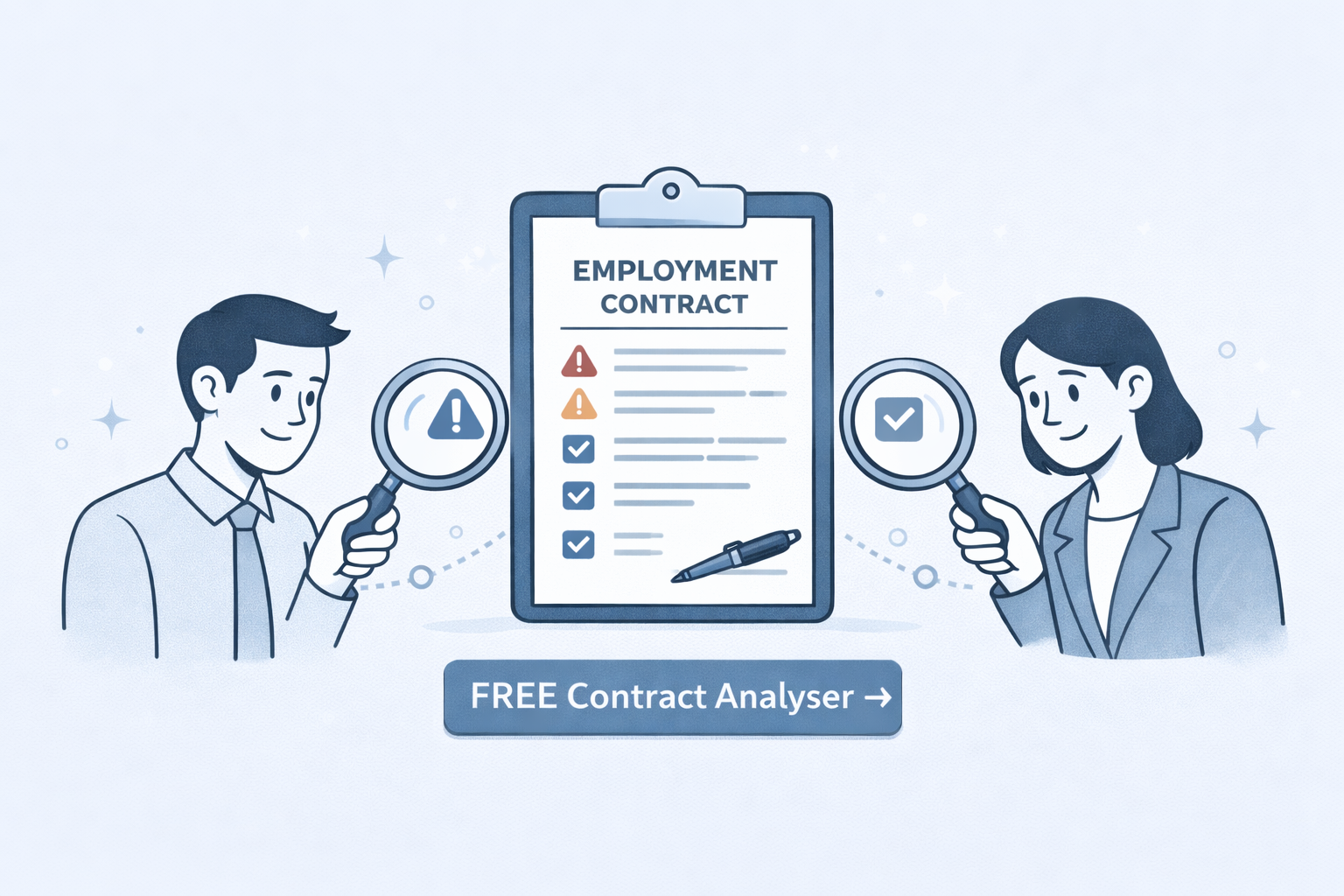
Most AI contract demos look impressive in five minutes. The real question is whether the platform catches risk in your contracts under your review constraints.
Use this checklist to run a demo that reflects real procurement pressure. You can test the workflow immediately on CompareX's contract analysis demo.
Run a live test now: CompareX contract analysis demo.
1) Bring a Real Contract Set
A serious demo needs realistic inputs:
- A standard supplier agreement
- A negotiated redline version
- At least one difficult PDF or scanned file
If a tool only works on clean templates, it will fail in production.
2) Validate Clause Coverage, Not Just UI
Ask the vendor to show:
- Clause-by-Clause Annotations
- Missing clause detection and Gap Analysis
- Handling of renumbered sections and moved clauses
Coverage quality is more important than dashboard design.
3) Test Risk Prioritization on Your Standards
Risk scoring should align with procurement policy, not generic legal text.
During the demo, test whether the system correctly highlights:
- Liability cap deviations
- Indemnity imbalances
- Auto-renewal and termination asymmetry
- Data processing and jurisdiction concerns
Use Risk & Compliance Insights as the benchmark output.
4) Verify Contract Comparison Depth
Many tools claim "comparison" but only show basic text diffs.
A strong demo should prove:
- Change detection across full clause context
- Meaningful summaries of what changed
- High-confidence identification of new risk introduced between versions
CompareX's AI Contract Comparison is built for this exact workflow.
5) Check Reviewer Workflow and Decision Speed
Measure practical throughput:
- Time from upload to usable summary
- Time for reviewer to identify top 3 issues
- Time to produce negotiation notes
If the tool cannot accelerate decisions, it is just another interface layer.
6) Probe Explainability with Real Questions
Ask targeted questions during the demo:
- "Which clauses drive the highest financial risk?"
- "What changed in termination rights between versions?"
- "Which items violate our fallback policy?"
Use Interactive Contract Q&A to test response precision and traceability.
7) Define Pilot Success Metrics Upfront
Before ending the demo, agree measurable pilot targets:
- Review time reduction
- Number of issues identified per contract
- False positive rate tolerance
- Reviewer adoption and consistency
Without explicit success criteria, pilots drift and decisions stall.
Demo Scorecard You Can Use
Score each category from 1-5:
- Clause extraction quality
- Risk prioritization relevance
- Version comparison accuracy
- Explainability and Q&A precision
- Workflow fit for procurement reviewers
Total score gives a clear go/no-go basis after one session.
Final Takeaway
A good demo is not about flashy output. It is about trustworthy risk detection and faster decisions on real contracts.
If you want to pressure-test this immediately, start with the contract analysis demo and benchmark it against your current manual process.